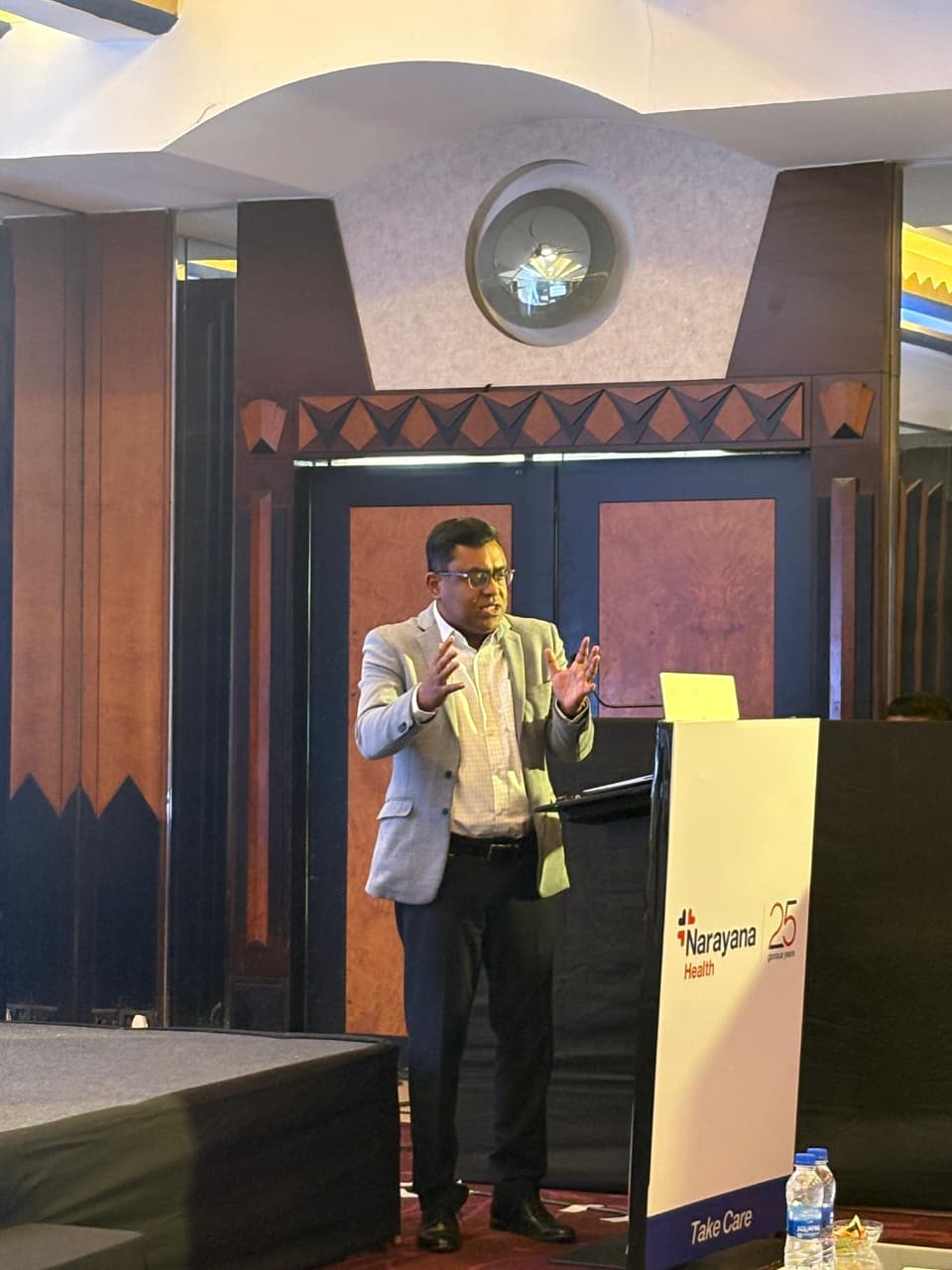



With growing global recognition of the aorta as a distinct and critical organ, Narayana RN Tagore Hospital, Mukundapur, has observed a steady rise in the number of patients presenting with complex and super-complex aortic diseases, underscoring the need for greater public and clinical awareness around timely diagnosis and management of aortic conditions.
The aorta, the body’s largest artery, plays a central role in supplying oxygenated blood to all major organs. Recent medical advancements have led to its reclassification as a separate organ system, owing to the complexity of diseases affecting it and the specialised surgical expertise required for treatment. Conditions such as aortic aneurysms, dissections, and complex aortic arch and thoraco-abdominal pathologies require precise diagnosis, advanced imaging, and coordinated multidisciplinary care. Many such cases are detected late, as symptoms often resemble those of cardiac emergencies, particularly acute heart attacks.
Over the past few years, Narayana RN Tagore Hospital has seen patients travelling from across Eastern India, including Odisha (Bhubaneswar), Mizoram, Manipur, as well as from other parts of the country, for evaluation and management of advanced aortic conditions. The hospital has also treated patients from neighbouring countries such as Bhutan. Doctors note that approximately 30 per cent of aortic cases are initially misdiagnosed as heart-related problems, as both conditions commonly present with sudden chest pain. Unlike heart attacks, acute aortic events can progress rapidly, with a significantly high risk of mortality within the first 24 hours if not identified and treated promptly, making time a critical factor for survival.
Dr. Atanu Saha, Senior Consultant – Cardiac Surgery at Narayana RN Tagore Hospital, who leads the aortic surgery programme, said, “Aortic diseases are often silent or misunderstood until they become emergencies. The overlap of symptoms with heart attacks frequently leads to delayed diagnosis. Early use of CT scan and echocardiography (ECHO) in patients presenting with chest pain can help differentiate aortic conditions from cardiac causes and guide appropriate management. Self-medication or delay in seeking medical attention in such situations should be strictly avoided.”
He further added that while aortic disease is commonly associated with older individuals, a growing number of patients in the 30–40-year age group, particularly tall individuals, are now being diagnosed. “Patients with congenital conditions such as defective aortic valves, those with uncontrolled hypertension, smoking habits, and women during pregnancy are at higher risk. It is also important to clarify that patients with pacemakers are not affected by aortic disease, which is a common misconception,” Dr. Saha noted.
Dr. Shuvro H. Roy Choudhury, Director & Clinical Lead, Interventional & Endovascular Radiology, said, “Management of complex aortic disease demands a truly multidisciplinary approach. At our centre, cardiac surgeons, vascular specialists, interventional teams and imaging experts work together to determine the safest and most effective treatment pathway for each patient. Supported by advanced CT imaging, catheterisation laboratories and open surgical capabilities, this integrated model enables accurate diagnosis, timely intervention and improved clinical outcomes, even in high-risk aortic conditions. This facility is provided via an easy-to-access outpatient ultrasound facility in our vascular lab. We even offer simple outpatient ultrasound-based screening for aortic & other vascular diseases”.
Dr. Lalit Kapoor, Senior Consultant – Cardiac Surgery, added, “Aortic surgery is a super-super-speciality domain for a cardiac surgeon where the cardiac surgeon has to acquire additional skills to deliver optimum care for the very crucial organ – “the aorta”. More than just the cardiac surgeon, it is the combined effort of the vascular surgeons and the interventional radiologists who participate in providing holistic treatment. It is not possible for patients, at this critical juncture, to jump from hospital to hospital in search of alternatives and possible help. It needs to be a destination centre which has all the facilities to handle everything, which is available at Narayana RN Tagore Hospital. The Aortic team has to be well aware of the anatomy, physiology, optimum timing for its intervention, and most importantly, have a group synchrony among all these.”
Narayana RN Tagore Hospital was the first centre in the region to systematically initiate advanced aortic surgical interventions, including frozen elephant trunk procedures, complex fenestration & Chimney procedures, and has since handled one of the highest volumes of complex aortic cases in Eastern India. Many of these cases involve extensive aortic involvement or emergency presentations, requiring specialised infrastructure, rapid diagnosis, and experienced multidisciplinary cardiac and vascular surgical teams. The number of such cases has been rising year on year, highlighting the growing burden of aortic disease and the importance of early detection and referral.
Mr. Abhijit C.P., Director & Cluster Head – Kolkata and Corporate Growth Initiative, Narayana Health (East), stated, “The increasing number of patients presenting with advanced aortic disease points to the need for stronger awareness, timely diagnosis, and appropriate referral. Focused attention on aortic health can help improve outcomes in these otherwise life-threatening conditions.”
Adding to this, Mr. R. Venkatesh, Group COO, Narayana Health, said, “Aortic diseases remain under-recognised despite their severity. Awareness among clinicians and the public that not all chest pain is cardiac in origin is essential. Early imaging and correct diagnosis can make a critical difference to patient survival.”
As awareness around aortic diseases grows, doctors emphasise the importance of recognising warning signs such as sudden chest or back pain, abdominal pain, unexplained breathlessness, and uncontrolled blood pressure. Structured screening of high-risk individuals and early imaging-based evaluation can play a key role in identifying aortic conditions at a stage where timely intervention can significantly improve survival and long-term outcomes.