

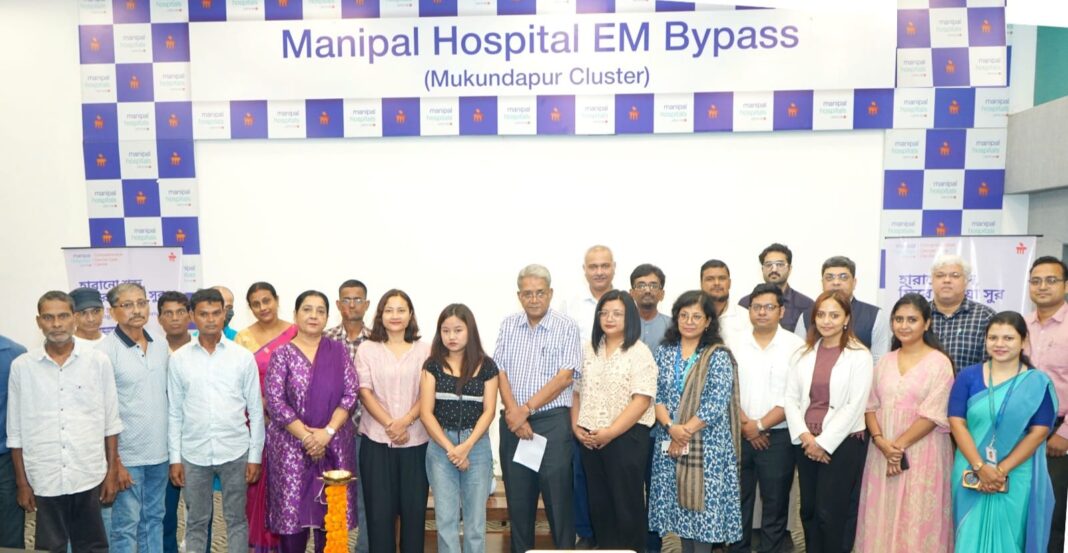
Reinforcing the importance of early diagnosis and timely intervention in improving cancer outcomes, Manipal Hospital EM Bypass hosted an interactive awareness session on Head & Neck Cancer, bringing together leading experts including Dr. Sourav Datta, Director – Manipal Oncology Services & Senior Consultant – Head & Neck Oncology Surgery; Dr. Harsh Dhar, Senior Consultant – Surgical Oncology; and Dr. Kinshuk Chatterjee, Consultant – Surgical Oncology, Manipal Hospital EM Bypass. The session focused on the challenges associated with the early detection, treatment and post-treatment rehabilitation of oral cancer patients.
Held ahead of World Head & Neck Cancer Day (July 27), the session aimed to raise awareness about one of India’s most common cancers. Head and neck cancers account for nearly 30% of all cancer cases among Indian men, with tobacco use remaining the leading risk factor. Experts highlighted that most patients in India are diagnosed at an advanced stage, reducing treatment options and survival outcomes. The discussion covered early warning signs, risk factors, preventive measures, advances in treatment, and the importance of comprehensive rehabilitation, while also addressing common myths surrounding oral cancer.
Bringing lived experiences to the forefront, cancer survivors shared their treatment journeys during the session, highlighting how early detection, multidisciplinary care and rehabilitation helped them regain confidence and return to normal life. Their stories underscored the importance of recognising warning signs early and seeking timely medical attention.
One of the cancer survivors, Chandrakala Mehta, a 60-year-old female from Bagmari, Kankurgachi, shared her experience, “I had no idea how serious my condition was when it all began. I had only noticed a small white patch and initially thought it was just an ulcer. After undergoing the necessary tests, the doctors explained my condition and immediately started the treatment. Although the diagnosis came as a shock, the way the medical team guided and supported me gave me immense confidence. I was admitted to Manipal Hospital EM Bypass on 24th May, and, after around 10 days of treatment, I was discharged with renewed hope and strength. I am deeply grateful to Dr. Kinshuk Chatterjee and Dr. Harsh Dhar for the exceptional care and support they provided throughout my treatment. They not only treated my condition with great expertise but also constantly encouraged me to stay positive. Every time they visited me, their reassuring words gave me the courage to keep fighting. The nursing staff and the entire hospital team were equally compassionate, attentive, and supportive, making me feel cared for at every step. I will always remain grateful to the doctors and the entire team at Manipal Hospital EM Bypass for helping me through one of the most difficult phases of my life.”
Highlighting the growing burden of head and neck cancers in India and the importance of timely diagnosis, Dr. Sourav Datta, said, “Head and neck cancer continues to be a major public health concern in India, accounting for nearly 30% of all cancers among men. Unfortunately, nearly two-thirds of patients are diagnosed at an advanced stage, when treatment becomes more complex and outcomes are less favourable. However, if detected early, many of these cancers are highly treatable with significantly improved survival rates and better quality of life. Any persistent mouth ulcer lasting more than two weeks, unexplained neck swelling, difficulty swallowing or changes in voice should never be ignored. Early consultation with a specialist can make all the difference.”
Speaking about the importance of comprehensive care beyond cancer treatment, Dr. Kinshuk Chatterjee, said, “The journey of a head and neck cancer patient does not end with surgery or radiotherapy/chemotherapy. Treatment often affects essential functions such as speaking, swallowing and nutrition, breathing, making rehabilitation an integral part of recovery. A multidisciplinary approach involving surgeons, medical and radiation oncologists, speech and swallowing therapists, nutritionists, physiotherapists and psychologists’ enables patients to regain function, confidence and independence. With advances in reconstructive surgery and rehabilitation, many patients today are able to return to their normal personal and professional lives after successful treatment.”
Emphasising that prevention remains the most effective strategy in reducing the incidence of head and neck cancers, Dr. Harsh Dhar, added, “Around 80–90% of oral cancers in India are linked to tobacco use, whether smoked or smokeless, making them largely preventable. While tobacco remains the biggest risk factor, excessive alcohol consumption, HPV infection and poor oral hygiene also contribute to the rising burden of disease. Prevention begins with avoiding tobacco, limiting alcohol intake, maintaining good oral hygiene and undergoing regular oral examinations, particularly for individuals at higher risk. Greater public awareness and behavioural changes are essential to reducing the incidence of these cancers.”
The session concluded with an interactive question-and-answer session, encouraging greater public awareness on head and neck cancer and reiterating the importance of prevention, early diagnosis and multidisciplinary care in improving patient outcomes.

