

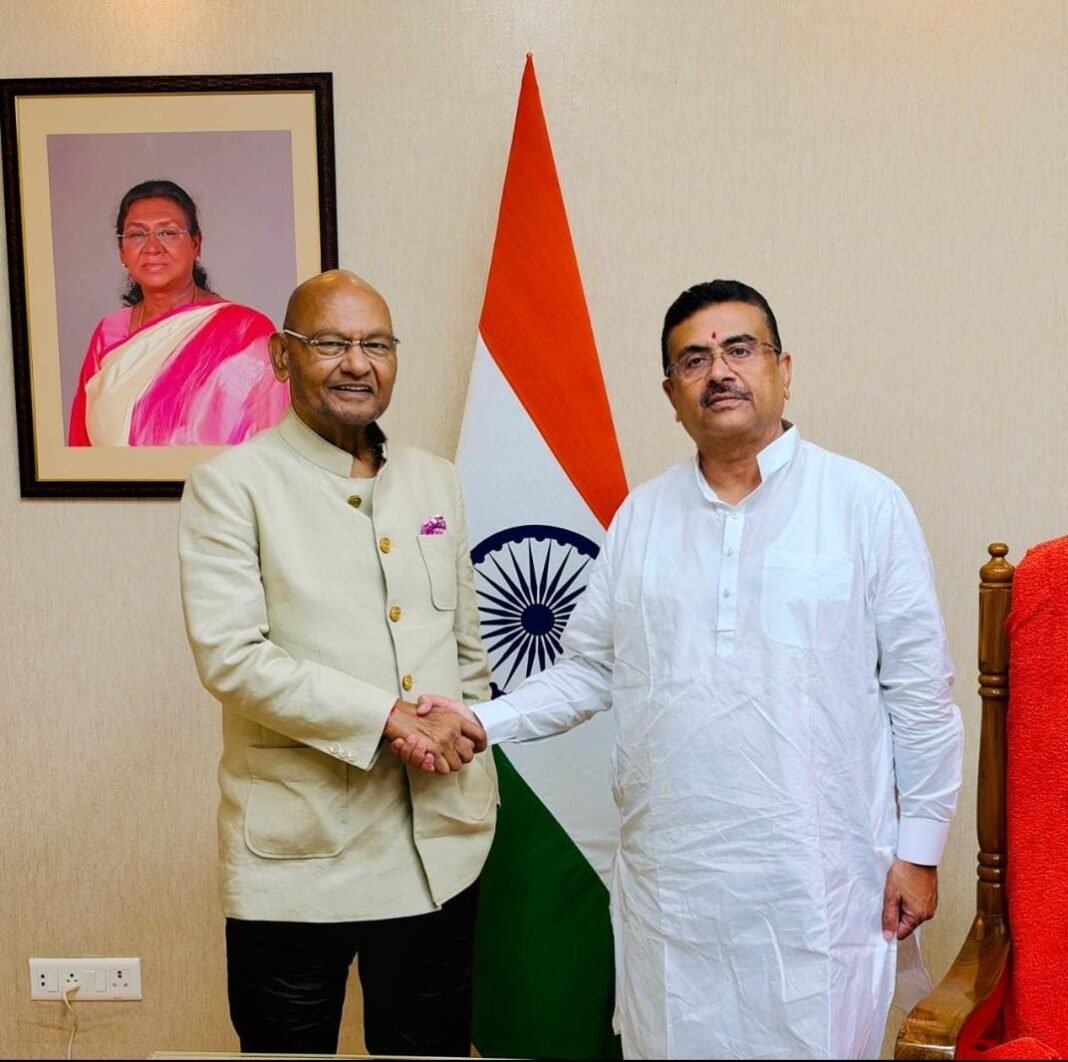
Vedanta Group is targeting USD 20 billion in profit over the next two years, Founder and Chairman Anil Agarwal said while addressing members of the Indian Chamber of Commerce (ICC) in Kolkata. The Indian Chamber of Commerce (ICC), in association with its ICC Young Leaders Forum, hosted an exclusive conversation drawing on an extraordinary entrepreneurial journey of Mr. Agarwal.
Recalling his early years in Kolkata, Agarwal shared memories of living in Bara Bazar, opposite the Satyanarayan temple, where he also attended a municipal school, Jain Vidyalaya. His family’s shop was in Tula Patti, and his grandfather and great-grandfather had also lived in the city. He recalled how his father later moved to Patna in search of work. Reflecting on the cultural and entrepreneurial ties between Bengal and Bihar, he spoke of his enduring connection with Kolkata.
On Bengal’s industrial potential, Agarwal said the state’s skilled workforce, intellectual capital and rich industrial legacy provide a strong foundation for economic growth. He urged businesses to partner with the government to unlock new opportunities for investment, enterprise and employment.
Vedanta has a diversified portfolio spanning aluminium, zinc, oil and gas, power, iron and steel, copper and other critical metals. Sharing his vision for the Group’s future, Agarwal said he wants to build the conglomerate into a global institution that serves the nation for generations. He emphasized that the true measure of business success lies not only in financial growth, but also in the ability to create jobs, expand industries and contribute to India’s economic development.
On inclusive growth, Agarwal highlighted Vedanta’s commitment to 35% women’s representation across the organisation, as mandated in the company’s Articles of Association. He also shared his broader social vision of ensuring that no child goes hungry and that every woman has the opportunity to become financially independent.
Agarwal reiterated that job creation must remain central to India’s growth ambitions. He highlighted how investments in large industrial facilities can stimulate entire downstream ecosystems, creating opportunities for smaller businesses, suppliers and entrepreneurs. He also urged aspiring entrepreneurs to combine data-driven decision-making with instinct, take calculated risks and persevere through setbacks.
Talking about the importance of resource security, Agarwal called for greater self-reliance in natural resources and a reduction in India’s dependence on imports. He also spoke about the potential to expand downstream processing and manufacturing, particularly across aluminium, copper and zinc, creating opportunities for businesses of different sizes. Greater domestic value addition, he noted, can strengthen industrial supply chains, encourage entrepreneurship and generate employment beyond the primary production stage.
Emphasizing the role of technology in driving industrial competitiveness, Agarwal called for greater adoption of artificial intelligence, research and development, and innovation. He also spoke about the opportunity to manufacture specialized glass used in televisions, mobile phones and vehicle dashboards in India, reducing reliance on imports.
Reinforcing his belief that businesses must create value beyond their balance sheets, Agarwal said his ambition is to build an institution that contributes to India’s progress over the long term, with employment generation, industrial growth and social impact at the heart of its legacy.

